Saving Salamanders
Conservation biology has long been held as a crisis discipline. We work hard for modest gains, and setbacks are the norm. But every once in awhile, evidence that blood, sweat, and tears expended for the perpetuation of Earth’s biodiversity effects positive change, and that is worth celebrating.
From 2008 to 2015, I worked for the U.S. Fish and Wildlife Service. During my last year with the agency, and because of my dissertation research on amphibian disease and my years of regulatory experience with an endangered salamander species, I was asked to join a team of agency scientists to write a Lacey Act rule that would list certain salamander species as injurious.

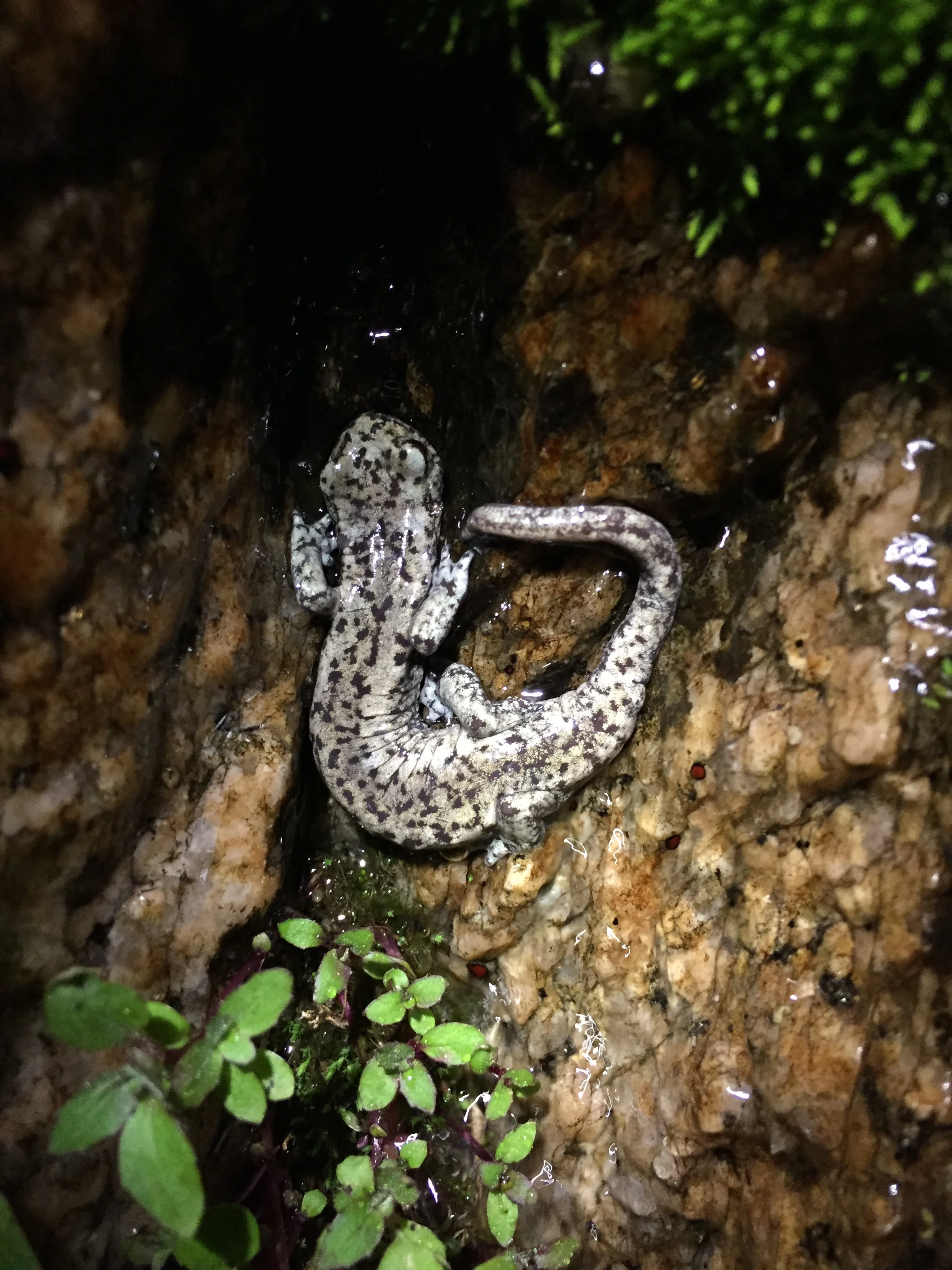
Mt. Lyell salamander, Hydromantes platycephalus, Sequoia-Kings Canyon National Park, August 2017
Conservation biology has long been held as a crisis discipline. We work hard for modest gains, and setbacks are the norm. But every once in awhile, evidence that blood, sweat, and tears expended for the perpetuation of Earth’s biodiversity effects positive change, and that is worth celebrating.
From 2008 to 2015, I worked for the U.S. Fish and Wildlife Service. During my last year with the agency, and because of my dissertation research on amphibian disease and my years of regulatory experience with an endangered salamander species, I was asked to join a team of agency scientists to write a Lacey Act rule that would list certain salamander species as injurious.
This was a necessary step because a new, highly deadly fungus had just been discovered. This fungus (Batrachochytrium salamandrivorans, or Bsal) had laid waste to a salamander species in the Netherlands, and it was--and still is--spreading. As a nation, the U.S. is home to the greatest number of salamander species on the planet. If Bsal arrives here, it could result in the next amphibian apocalypse. The director of the U.S. Fish and Wildlife Service at the time, Dan Ashe, was inundated with phone calls, emails, letters, and social media posts asking him to do something to protect U.S. salamanders from a Bsal invasion. What ensued was one of the most rapid actions by the agency I’ve ever witnessed.
Dan Ashe told his staff to make it happen—and we did. Our team was assembled with fisheries and disease biologists, an economist, Lacey Act experts, and an expert on disease in amphibian trade. We had strict, short deadlines. Because we were working from different locations across the country, we had regular conference calls to monitor our progress. The work was given top priority over other projects. My colleagues and I cancelled vacations and worked long hours to pull it together.
On January 13, 2016, the Service published the Lacey Act rule, listing 201 salamander species as injurious. The rule bans the importation and interstate transport of these species, which, it was hoped, would stop or slow the spread of Bsal.
The effort was lauded by conservation groups. The agency braced for backlash from the amphibian pet trade industry, but none came. Salamander keepers generally thought the rule was a good idea, and some even capitalized on the opportunity to start marketing their salamanders as “Bsal free”.
The rule is a start, but will it work? Some think it is only a matter of time before Bsal makes it past U.S. borders anyway. This may be; but this week, a report published in Nature revealed that as of yet, no Bsal has been found in captive U.S. populations, and credits the Lacey Act rule with this good news. The researchers received over 600 swab samples of 65 species by mail from captive salamander owners. According to the report, the Lacey Act rule reduced captive salamander imports to the U.S. by over 98%, significantly reducing the risk of Bsal spread. This is big news, even to those who don’t necessarily follow amphibian disease trends like I do.
There is still more work to be done. Agencies and research groups continue to monitor for Bsal in the wild so that they can try to stem the tide if and when Bsal arrives. In the meantime, the support for the Lacey Act rule has been overwhelmingly positive. For an agency whose actions are continuously being litigated by those who think that the agency is regulating too much, and conservation groups who think that the agency is regulating too little, the public support for the Lacey Act rule is nothing short of groundbreaking. Thank you, Dan Ashe, and thank you to all of the individuals and conservation organizations that spoke up and requested action be taken on behalf of our nation’s amphibians.
Summer in the Sierra Trip #2: A frog reintroduction, Mt. Lyell salamanders, and effervescent wildflowers
This week, we hiked to the site where my field partner and I will spend our next three 10-day trips. This basin is very different from the last, and about 400 feet lower, with more trees and fewer frogs. Having been hit by the amphibian chytrid fungus, the mountain yellow-legged frog populations here are persisting at a very low level. Frogs are even being flown up to higher fishless lakes in the basin to try to bolster their numbers, and this basin harbors one of those lakes.
"Nature is not a place to visit; it is home." -Gary Snyder

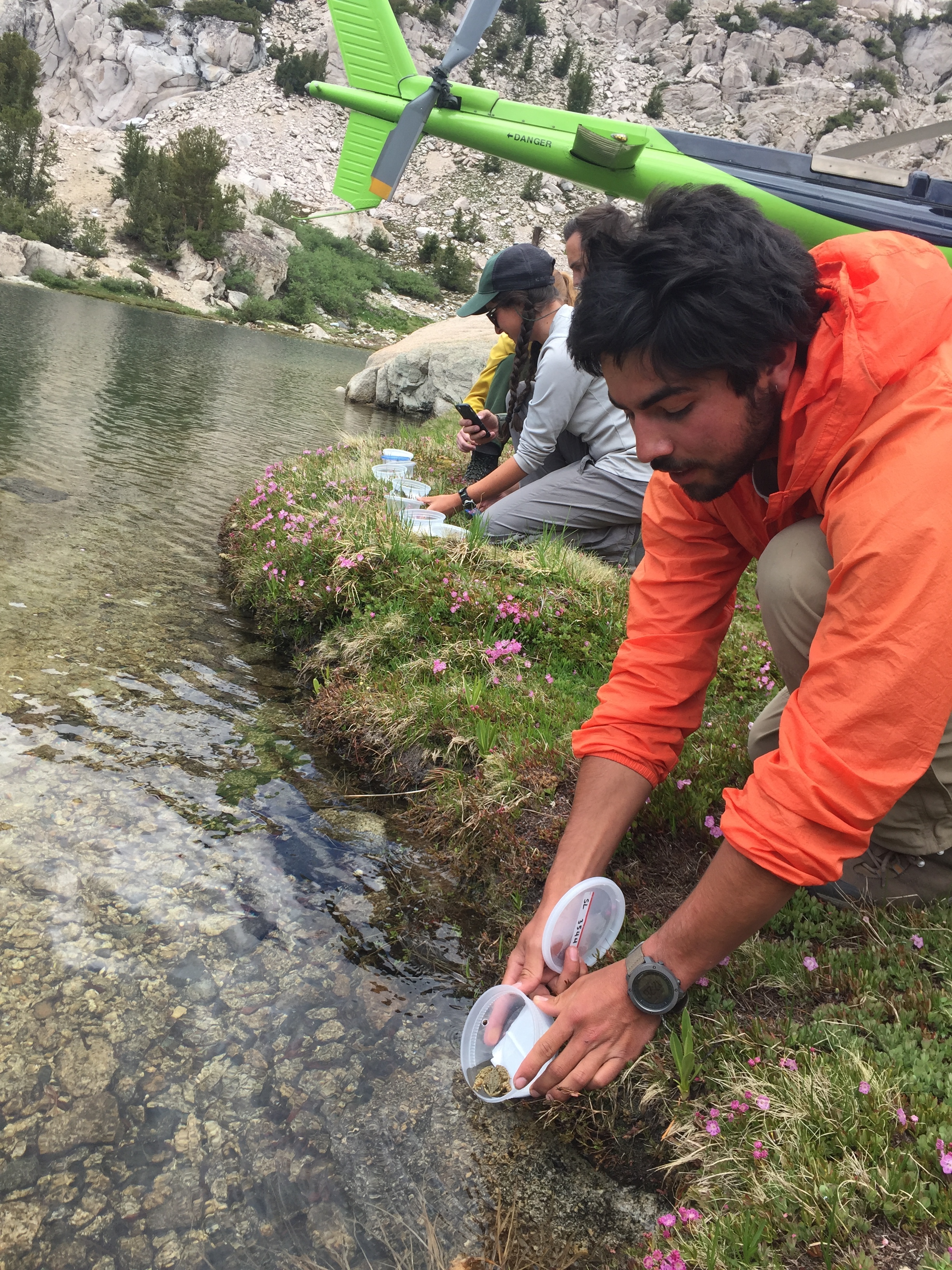
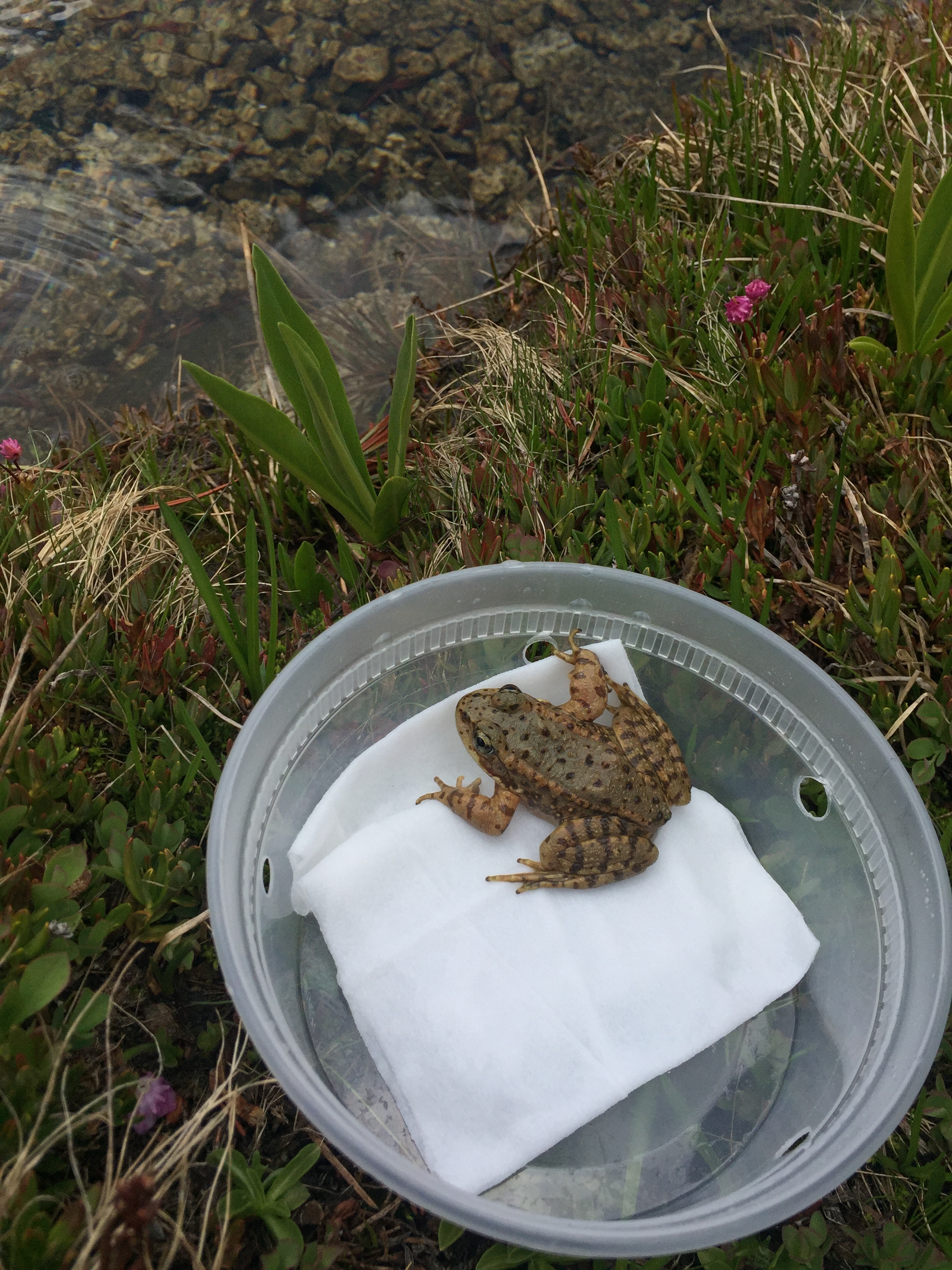
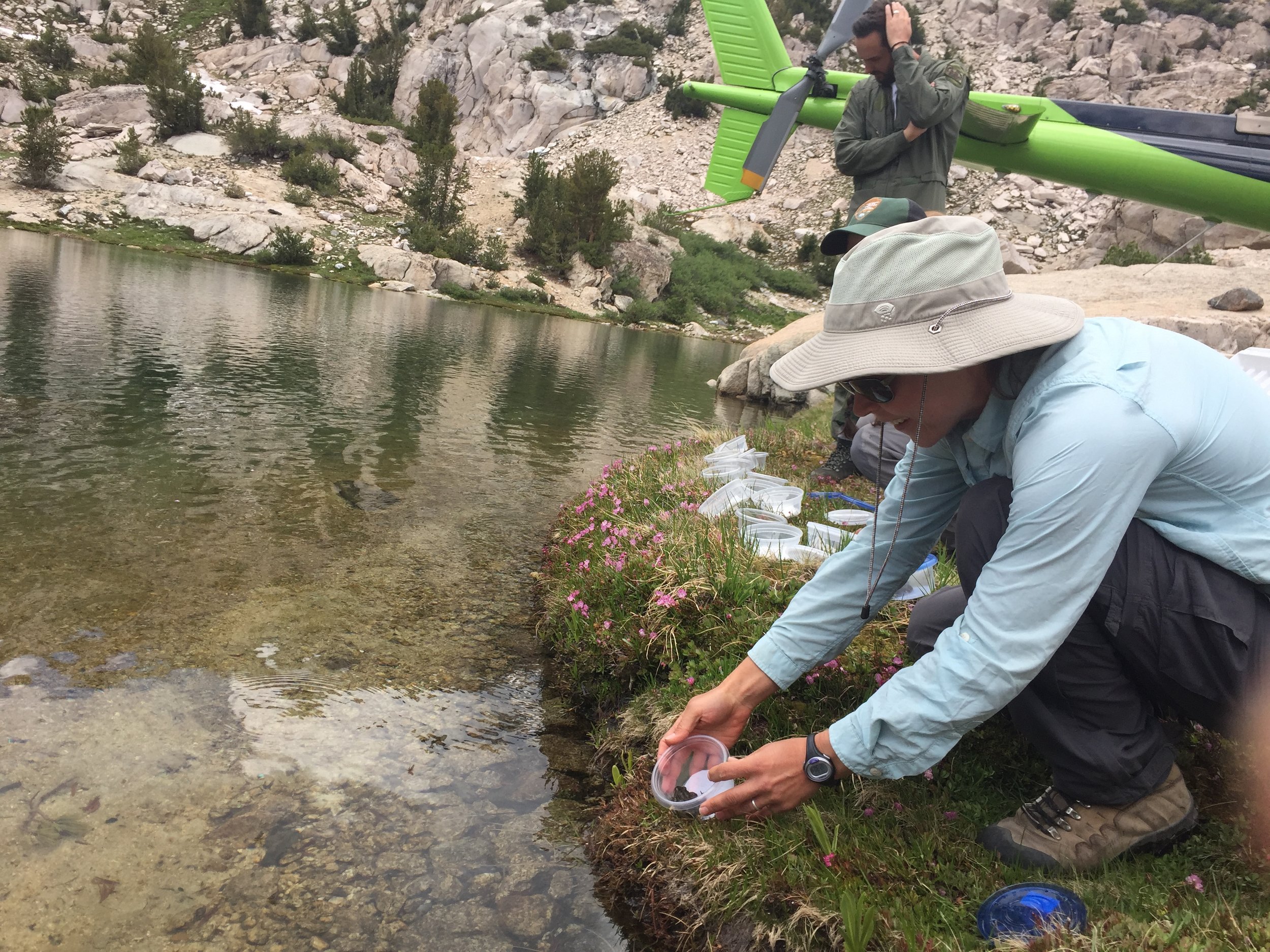
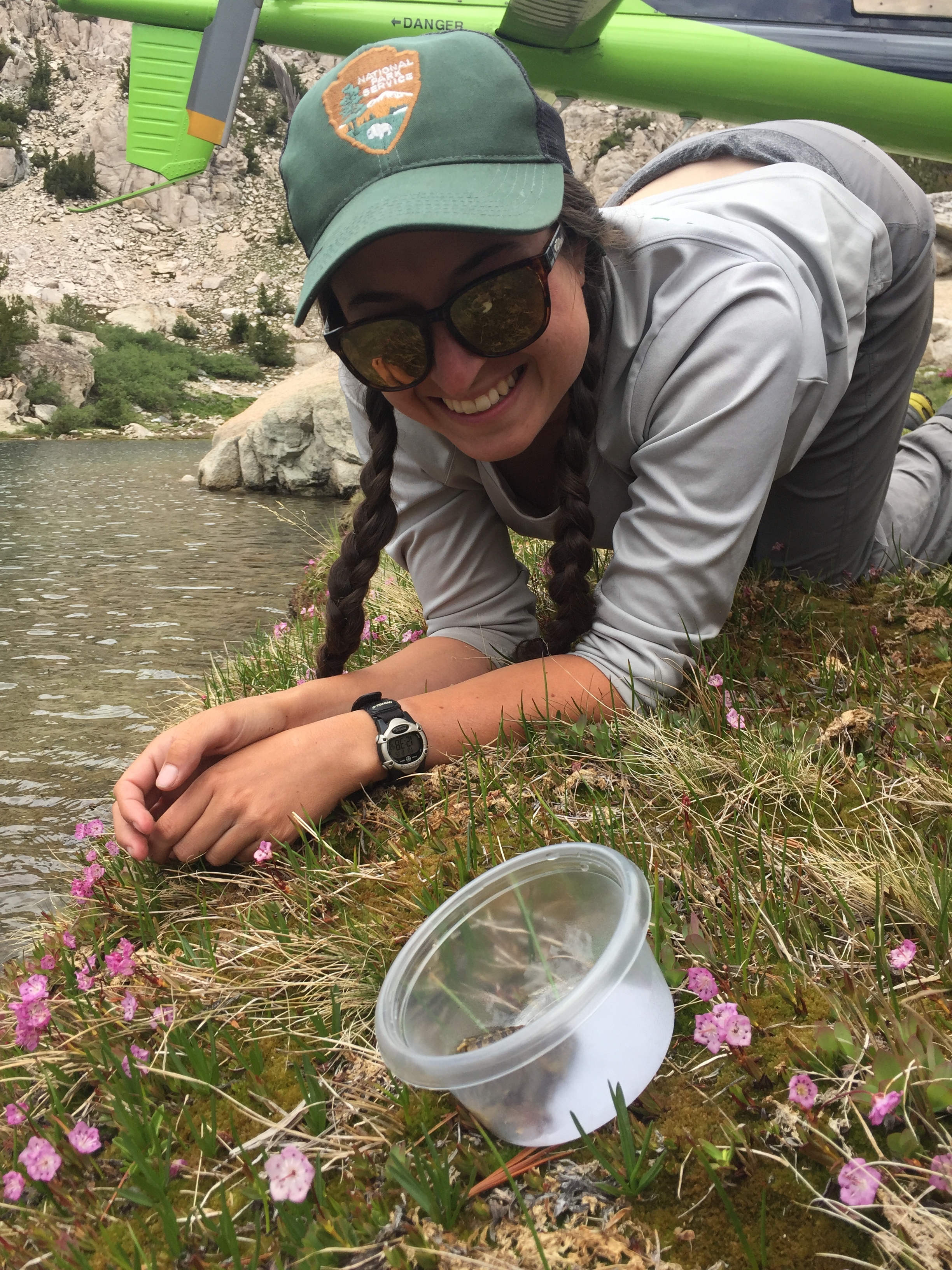
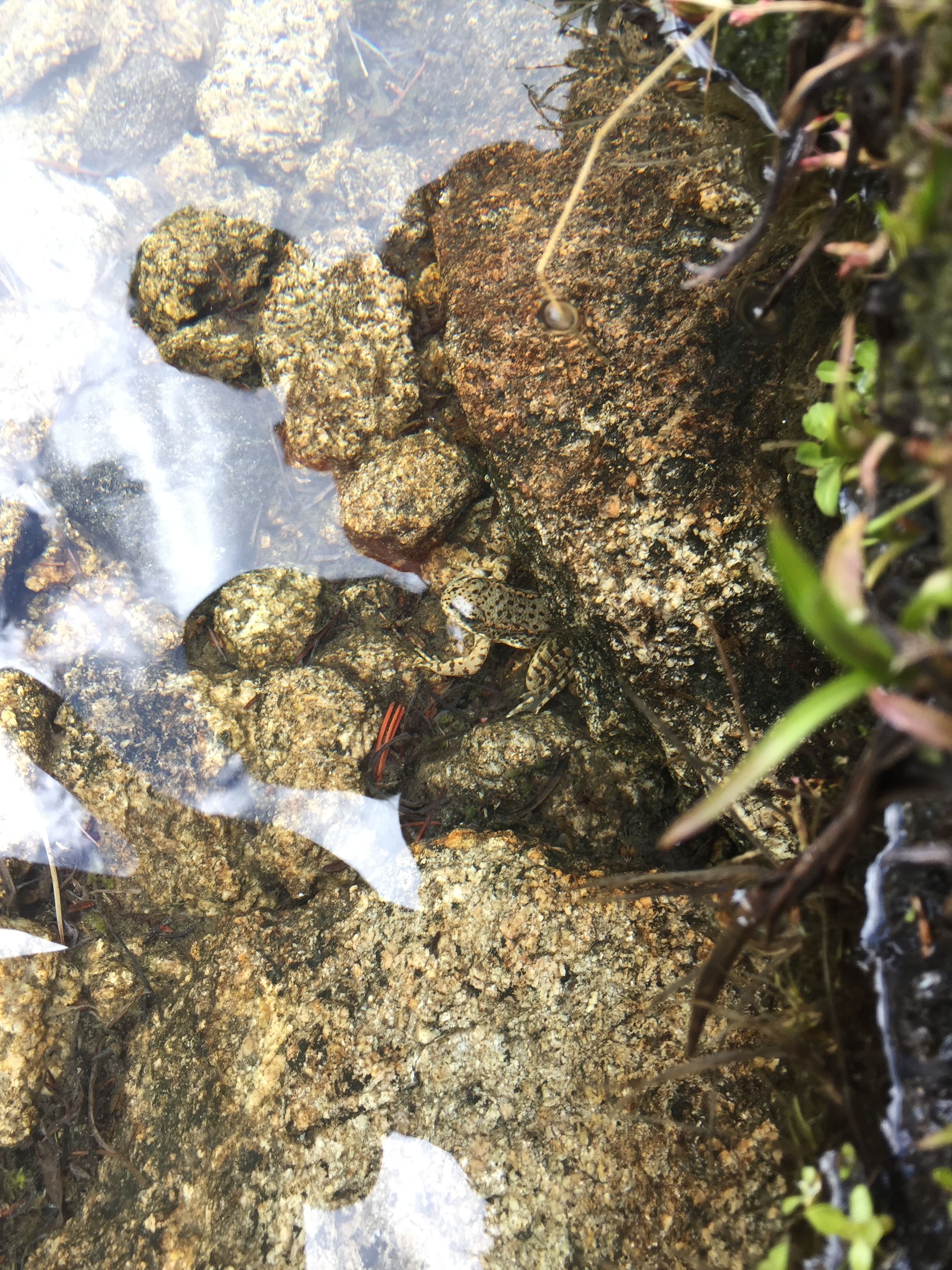
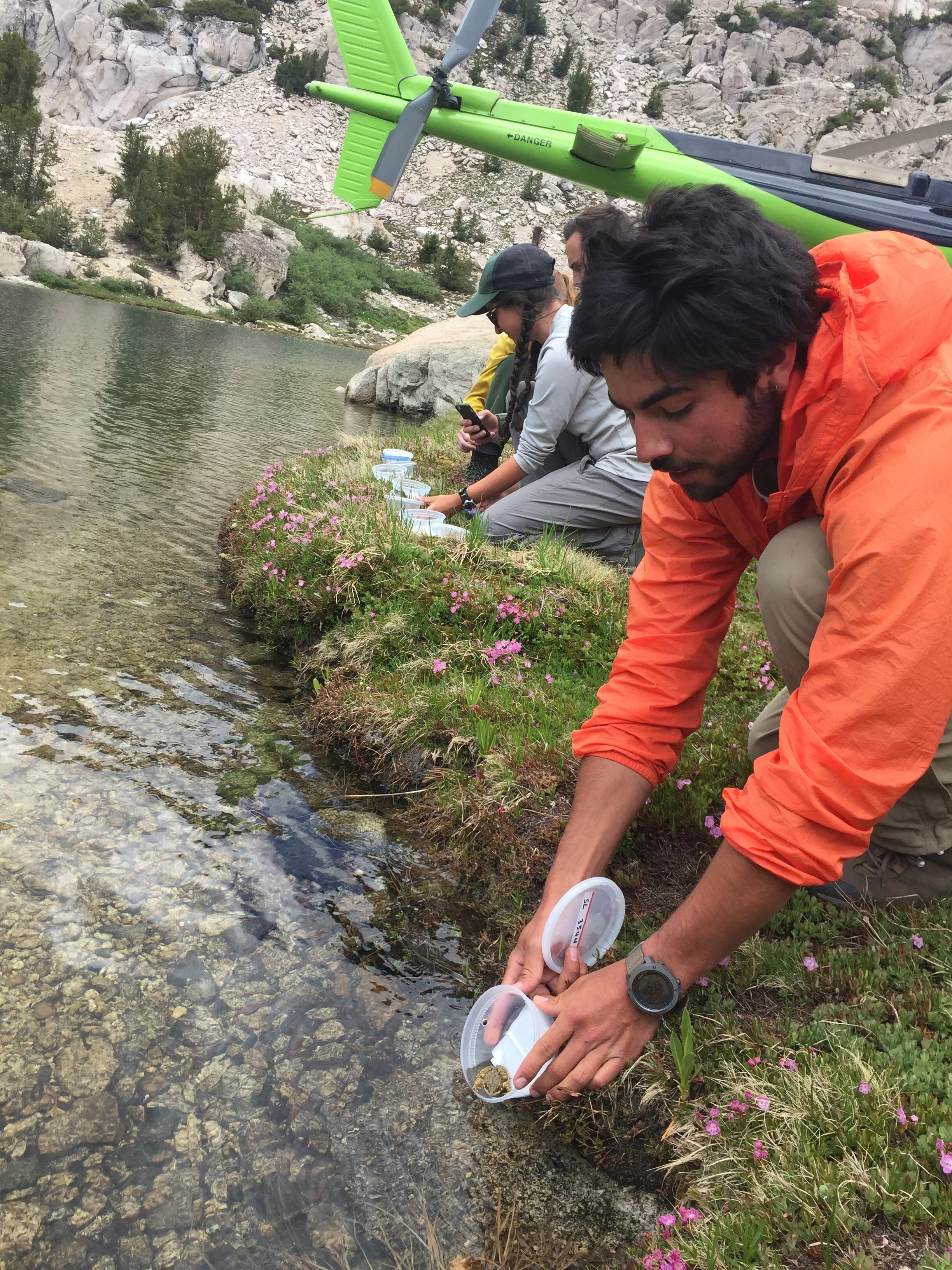
Miguel Provencio shows a mountain yellow-legged frog to freedom.
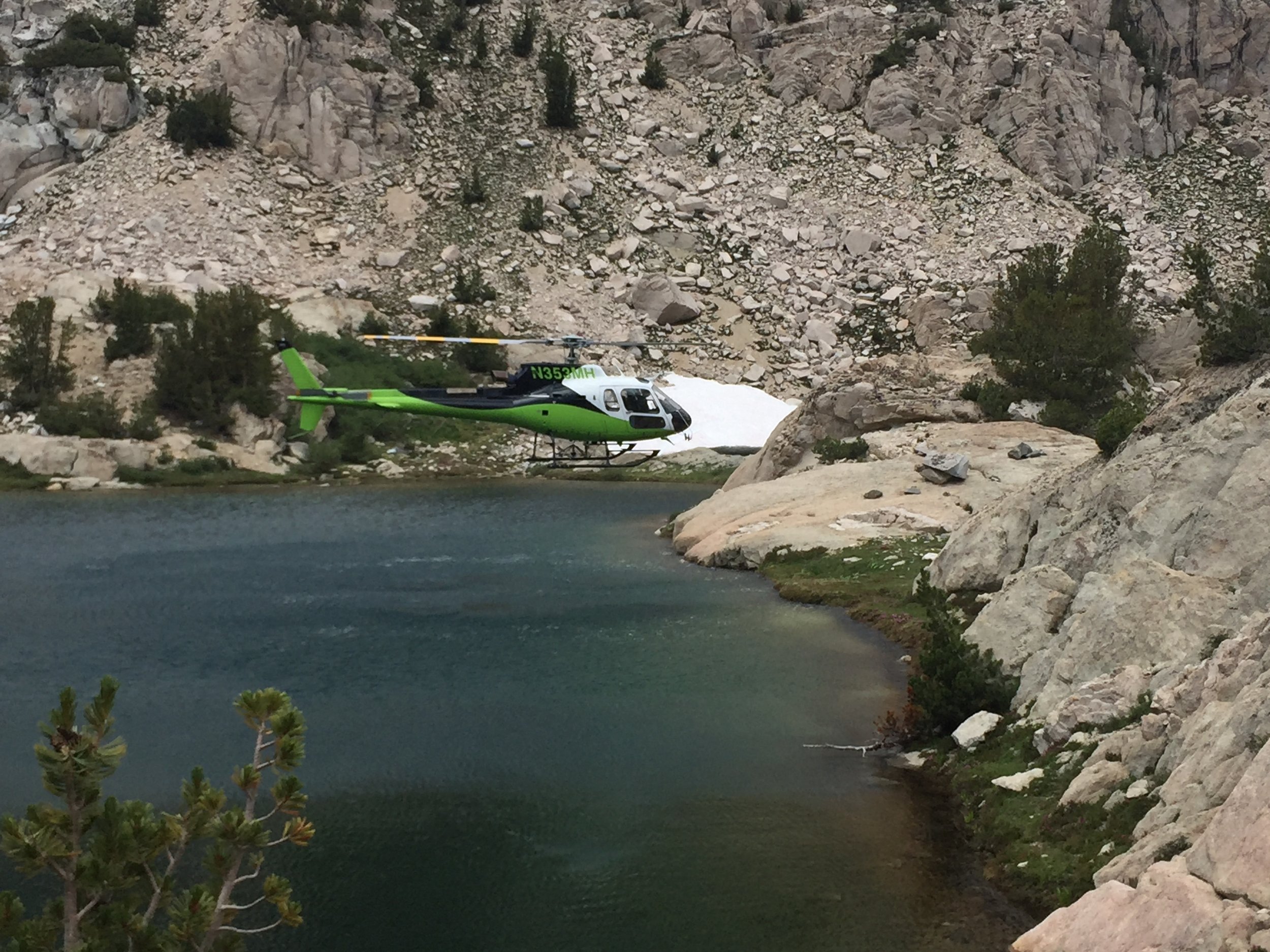
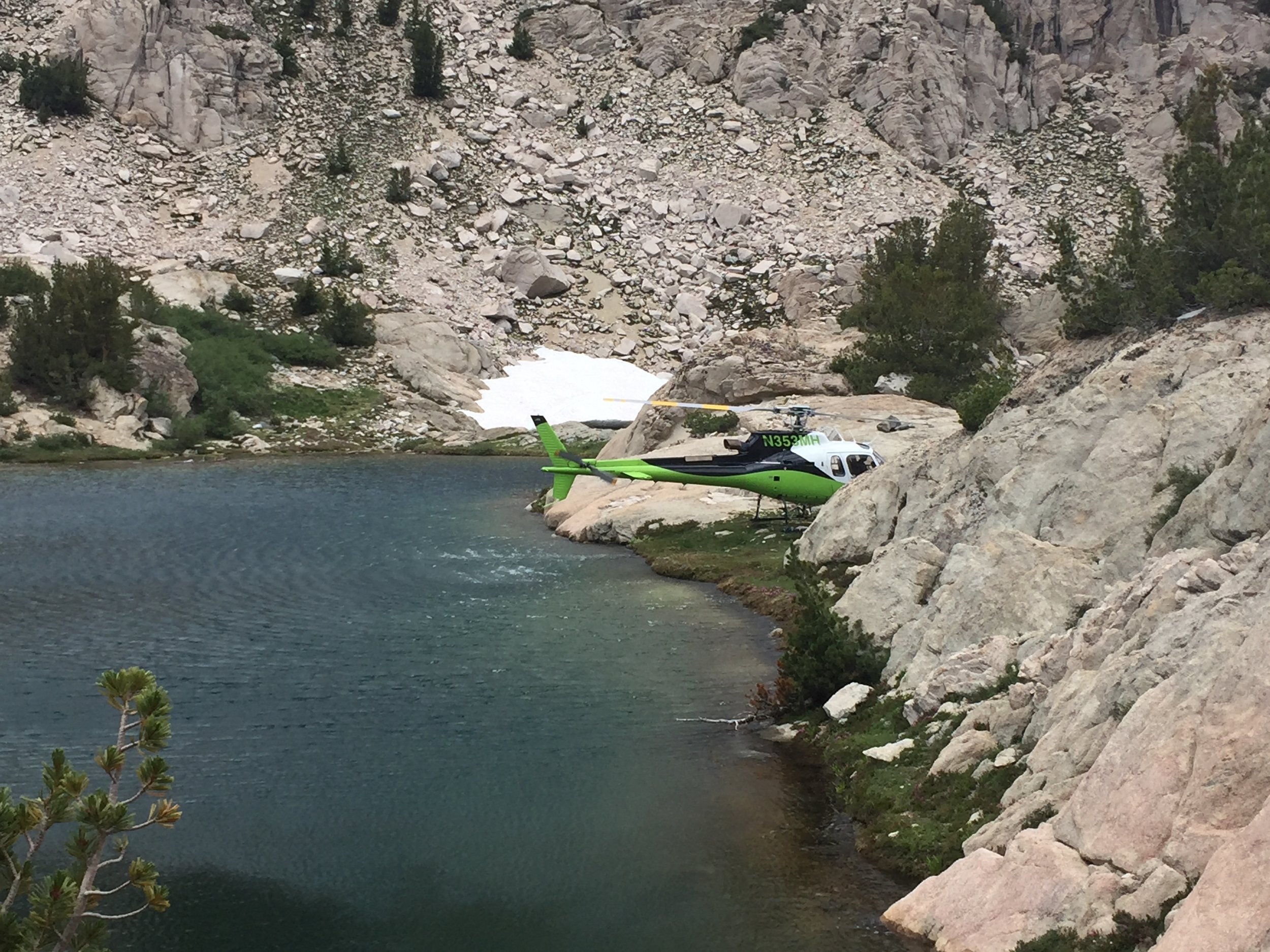
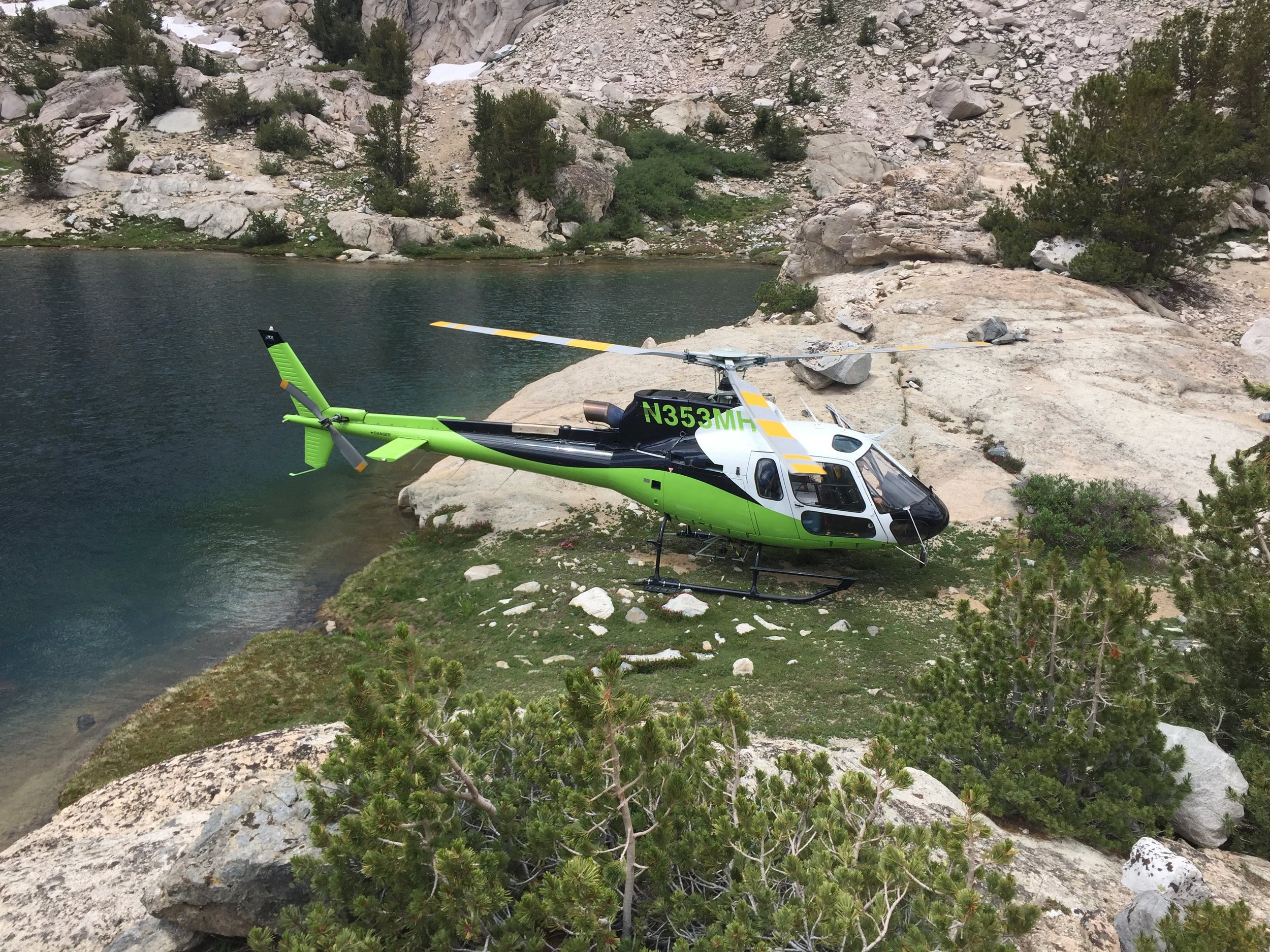
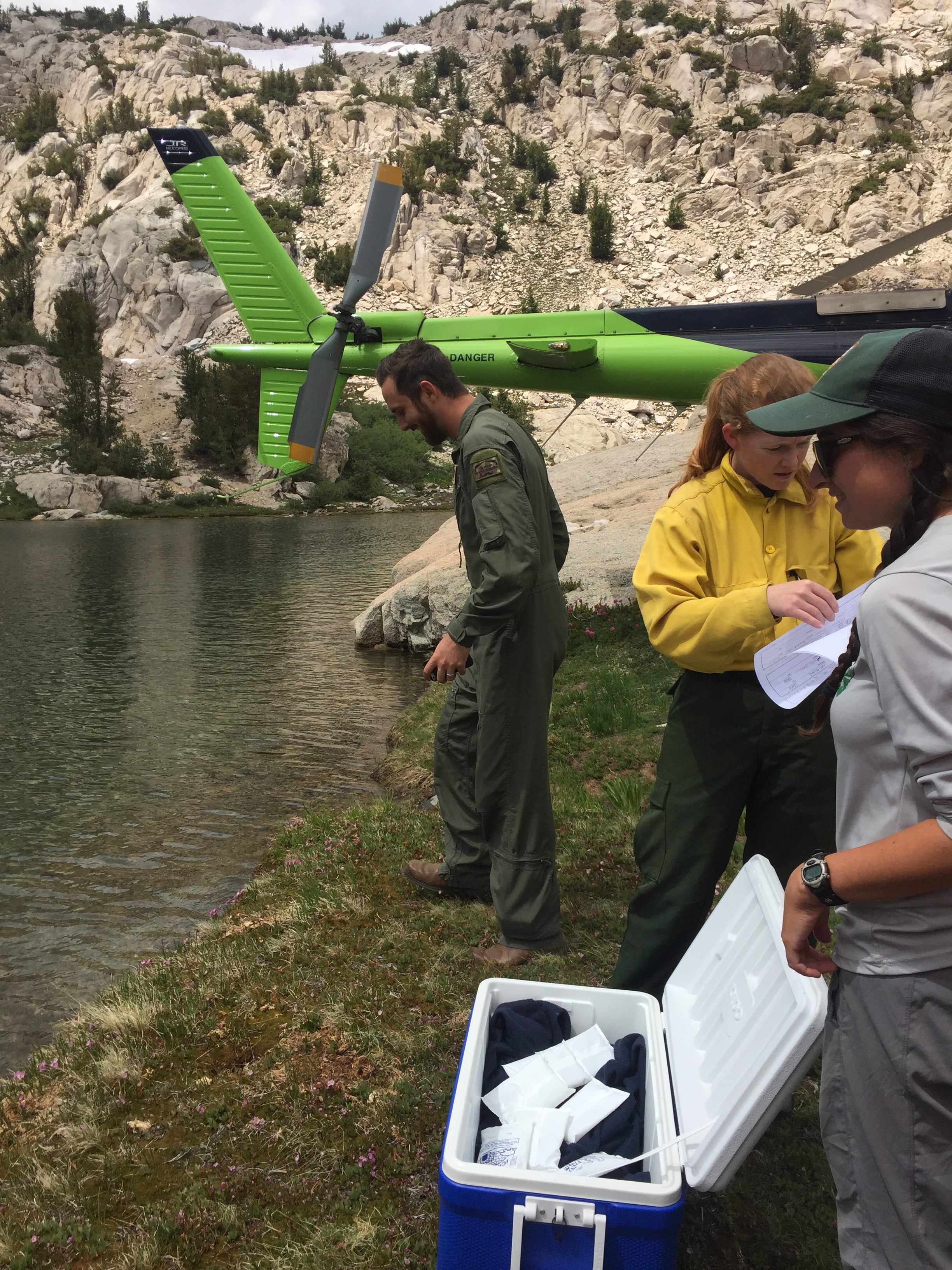
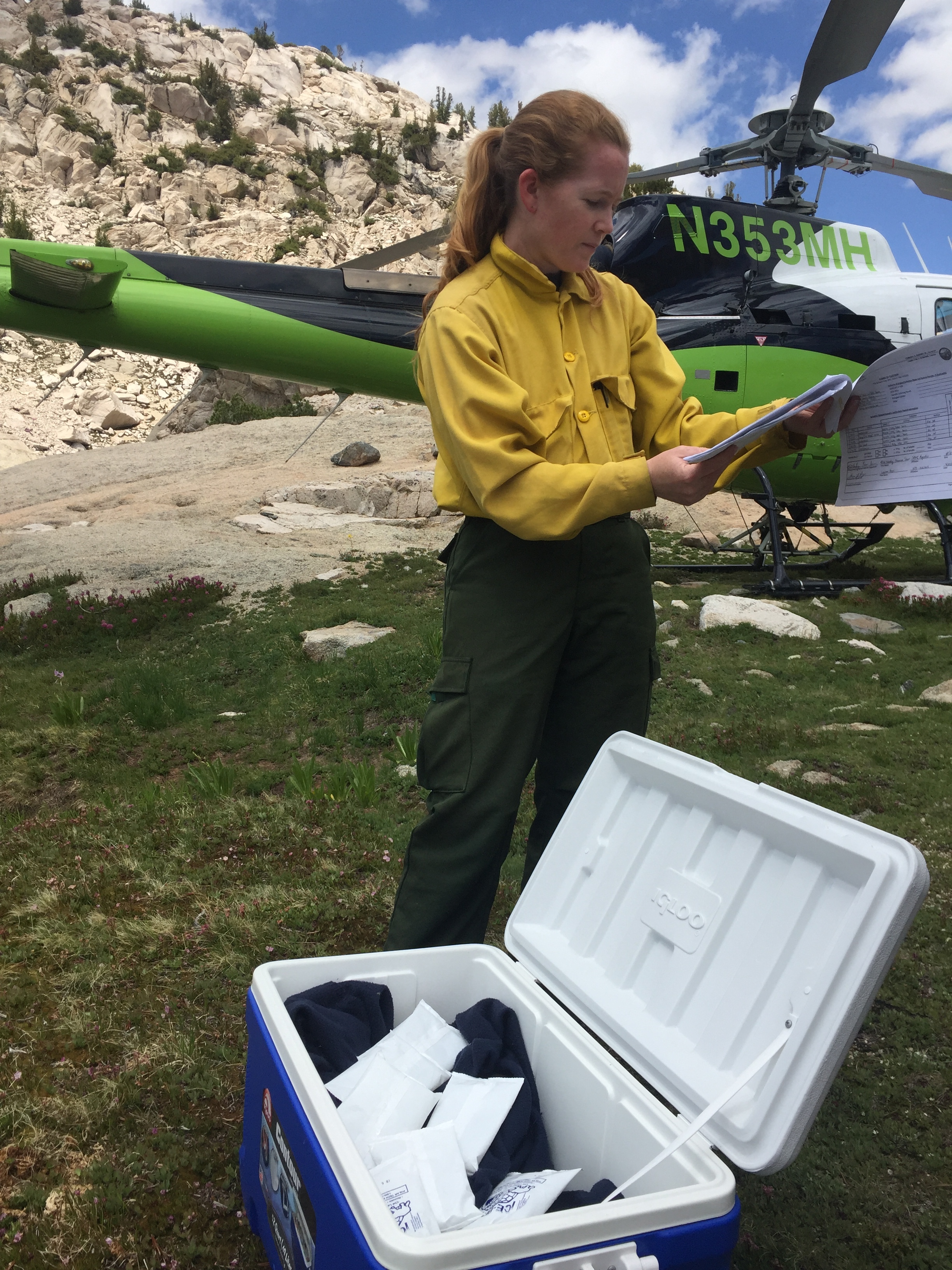
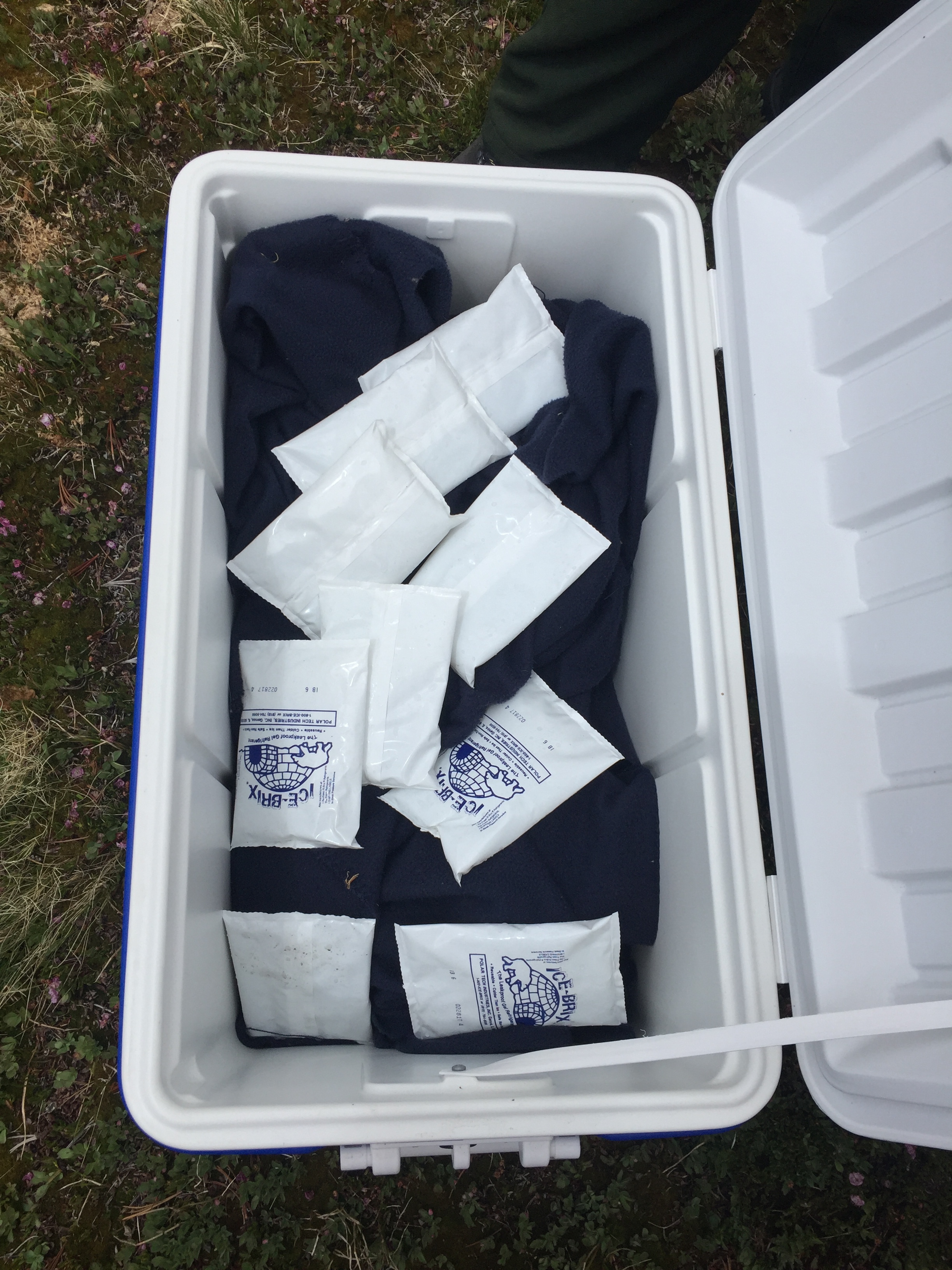
This week, we hiked to the site where my field partner and I will spend our next three 10-day trips. This basin is very different from the last, and about 400 feet lower, with more trees and fewer frogs. Having been hit by the amphibian chytrid fungus, the mountain yellow-legged frog populations here are persisting at a very low level. Frogs are even being flown up to higher fishless lakes in the basin to try to bolster their numbers, and this basin harbors one of those lakes. This week, 25 frogs were brought from the San Francisco Zoo, via Prius, to the Ash Mountain helibase of Sequoia-Kings Canyon National Park, and then flown by helicopter to our site. There is nothing quite like releasing animals back into their native home, in the hopes that they will persist into a better future. (More images are available in the gallery at the bottom of this post).

Mount Lyell salamander, Hydromantes platycephalus
Earlier in the week, we packed our sleeping bags and hiked up a side drainage in search of the rare, legendary Mt. Lyell salamander. This species belongs to the family of salamanders without lungs (Plethodontidae). What makes them extra special is that they are found only in seeps on cliff faces and in granite talus from 4,000 to 12,000 feet in elevation. They have even been observed on snow! Once we reached the granite bench where we would be sleeping, we watched the sun set over the basin while we waited for nightfall. Then we hiked up to the first seeps we could find. After some searching through the darkly colored cracks in the rock where the water trickled and the plants grew in miniature, there they were--two beautiful grey Hydromantes platycephalus, their skin perfectly matching the wet rock they clung to. One of them made a break for it and slowly crawled up the seep away from us. The other--larger--hunkered down in place. We stood on our toes to get a better view, balancing carefully on the edges of the wet, mossy rocks beneath our feet. Afterward, we stopped to watch the Milky Way perfectly reflected in a glassy lake like an inky underworld. Back at our granite slab overlooking the basin, we fell asleep under the final showing of the Perseid meteor shower.

Again, the wildflowers were stunning, giving it all they've got in the brief window of High Sierra summer. They sprout up from the most unlikely places--between and under rocks, in the interstices of cliff faces. I was scrambling across some cliffs to reach a stretch of lake shore when the most perfect columbine I had ever seen exploded in front of me. It was flawless--the flowers had just opened, and the next blossoms in line were hanging at exact angles from the blooms. I was fairly far from the nearest trail and alone--I may be the only human who got to see that perfect flower.
It's no wonder that John Muir's descriptions of Sierra Nevada natural history read like devotional poems--here, nature has a way of reaching into a person like nowhere else.