Your Custom Text Here
Uncovering a species' past to inform its future
While planning the dissertation work that would ultimately consume the next 6.5 years of my life in graduate school, I learned an intriguing bit of information about the native amphibians of southern California. I was familiar with all of the amphibian species I could find in different habitats in the region, and was surprised to learn that a species—one I had never heard of—was missing, and had been for almost 40 years.
While planning the dissertation work that would ultimately consume the next 6.5 years of my life in graduate school, I learned an intriguing bit of information about the native amphibians of southern California. I was familiar with all of the amphibian species I could find in different habitats in the region, and was surprised to learn that a species—one I had never heard of—was missing, and had been for almost 40 years.
The fact that it had disappeared and then disregarded—so much so that newer naturalists were not even told about it—was curious. How could a species disappear from an entire region and then be effectively forgotten? As an endangered species biologist I felt compelled to resurrect this frog’s story in an attempt to find out more about why it disappeared. This information could give agencies considering listing the species under the federal or state Endangered Species Acts or reintroducing it to places where it has gone extinct better information on which to base their decisions.

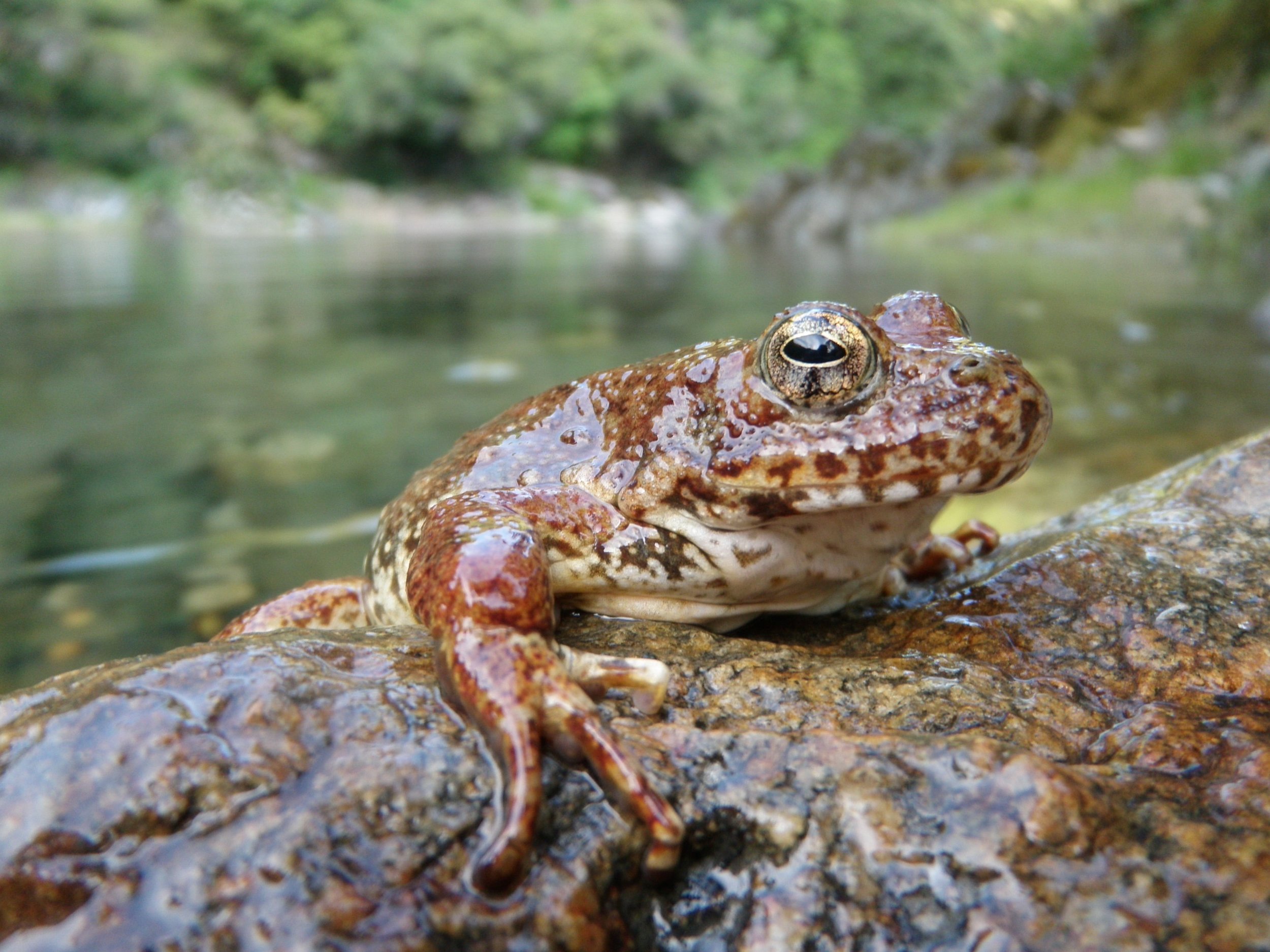
Rana boylii from an existing population in northern California. Photo credit: Alessandro Catenazzi
The foothill yellow-legged frog (Rana boylii) once ranged from Oregon to Baja California, from mid-elevation sites to the coast. Like many California frogs, at one time they were so abundant that it was difficult to avoid stepping on them when walking along streams. Less than a decade after these observations, no one could find a foothill yellow-legged frog anywhere in southern California.
As species disappearances from unknown causes go, this is breakneck speed.
The global trend of amphibian declines has pointed to habitat loss, UV radiation, and pesticides as potential culprits, yet most of these act gradually, slowly chipping away at populations over time. One of the only threats that can cause rapid extirpation—like that of the foothill yellow-legged frog in southern California—is disease.

A mountain yellow-legged frog (Rana muscosa) that has succumbed to chytridiomycosis in the Sierra Nevada of California.
Chytridiomycosis—caused by the fungal pathogen Batrachochytrium dendrobatidis (Bd)—has devastated frog populations all over the world. Could it have done the same to the foothill yellow-legged frog in southern California? To take a closer look at this, I needed to get more information about when exactly it disappeared, how abundant it was before it disappeared, and—most importantly—when Bd arrived in the region. If Bd arrived immediately prior to the frog’s disappearance, then that would support my hypothesis that they were afflicted by chytridiomycosis and their populations were subsequently affected.
It’s important to note that this would not prove my hypothesis, which is about something that happened in the past, and the past cannot be re-created in order for us to make objective observations. All we can do is make our best use of proxies of the past—windows that give us a glimpse of what things were like back then. It is important to acknowledge that windows only provide a partial view of the universe, and do not reveal the whole story.
The first proxy I used was historical, archived amphibian specimens—available in natural history museums. In an earlier chapter of my dissertation I tested an improved protocol to better detect Bd DNA from museum specimens (hint: it’s pretty tricky because the formalin used to fix the tissue damages DNA) and used that protocol to look for Bd DNA in all amphibian species that occurred in the same places as foothill yellow-legged frogs before, during, and after their decline.
As a second proxy, I interviewed people who were visiting southern California streams before the foothill yellow-legged frog disappeared. At first, this idea was a tougher sell to my dissertation committee, because it’s not a method that ecologists—or any natural scientists for that matter—typically use. Part of the reason for that is it can be messy—people’s memories are colored by their experiences, and by other people— and can hardly represent objective observations. But I had to try it because the information that I sought didn’t exist anywhere but in people’s memories, and—sometimes—the field notes stashed away in their garages. I also used archived field notes to find out more about when foothill yellow-legged frogs were observed, and how many of them there were at different times. I learned to conduct informational interviews by attending the UC Berkeley Oral History Institute one summer, and received a lot of helpful advice about historical methods from the environmental historians at UC Santa Barbara.
With the help of some stalwart undergraduate assistants, I sampled over 1300 museum specimens and ran three separate qPCR tests on each one of those samples. From the interviewees and the field notes they shared, I was also able to identify more records and abundance estimates of the frogs. I found that although Bd arrived in the region long before the foothill yellow-legged frog began to decline, it spread widely immediately before the frogs disappeared.

Results of museum specimen sampling through time. Red dots indicate where Bd was found in a museum specimen for the time period indicated at the top of each map.
There was a lot going on in southern California in the mid-1960s: it was starting to feel the pressure of a rapidly expanding Los Angeles metropolitan region, and this was accompanied by increased recreational use of streams that were once rarely visited by people, except for the occasional herpetology class or naturalist. Roads extended deeper into natural areas, making it easier for people to access them. Exotic species began to appear—either intentionally stocked or as abandoned pets. If Bd was present in the region before this, all of these factors could have assisted in its spread in the 1960s.
How did Bd get to southern California in the first place? In the early 1900s bullfrog farms were gaining in popularity, and a small population of bullfrogs was brought to Topanga Canyon (Los Angeles County) in 1912. Bullfrogs are known to harbor Bd and spread it between continents via the large international trade of amphibians.
There is much more to the story, including whether the foothill yellow legged frog is susceptible to chytridiomycosis (spoiler alert: yes but not always) and why it isn’t extinct elsewhere in California. These questions and more are discussed in the full article.
Saving Salamanders
Conservation biology has long been held as a crisis discipline. We work hard for modest gains, and setbacks are the norm. But every once in awhile, evidence that blood, sweat, and tears expended for the perpetuation of Earth’s biodiversity effects positive change, and that is worth celebrating.
From 2008 to 2015, I worked for the U.S. Fish and Wildlife Service. During my last year with the agency, and because of my dissertation research on amphibian disease and my years of regulatory experience with an endangered salamander species, I was asked to join a team of agency scientists to write a Lacey Act rule that would list certain salamander species as injurious.

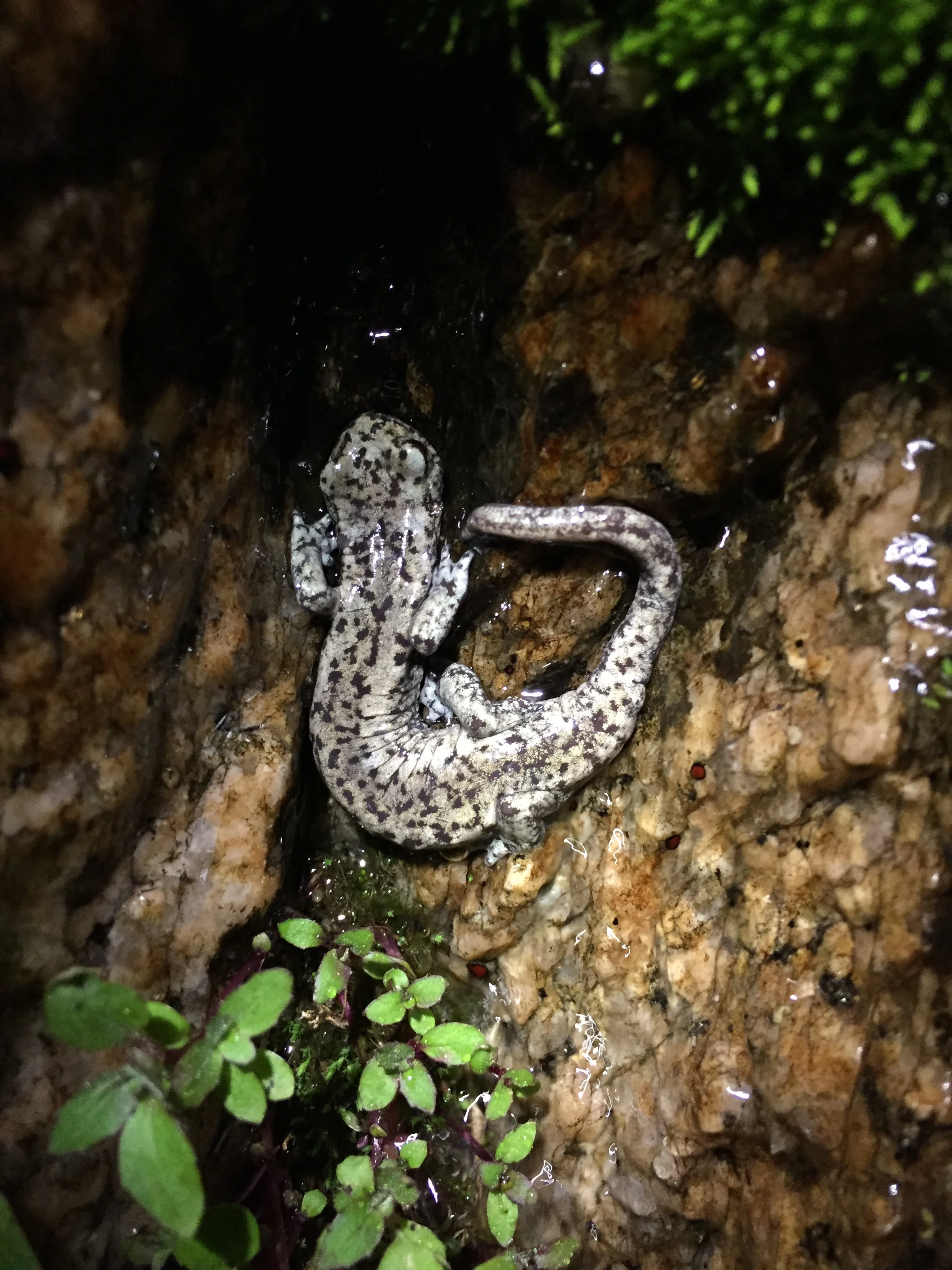
Mt. Lyell salamander, Hydromantes platycephalus, Sequoia-Kings Canyon National Park, August 2017
Conservation biology has long been held as a crisis discipline. We work hard for modest gains, and setbacks are the norm. But every once in awhile, evidence that blood, sweat, and tears expended for the perpetuation of Earth’s biodiversity effects positive change, and that is worth celebrating.
From 2008 to 2015, I worked for the U.S. Fish and Wildlife Service. During my last year with the agency, and because of my dissertation research on amphibian disease and my years of regulatory experience with an endangered salamander species, I was asked to join a team of agency scientists to write a Lacey Act rule that would list certain salamander species as injurious.
This was a necessary step because a new, highly deadly fungus had just been discovered. This fungus (Batrachochytrium salamandrivorans, or Bsal) had laid waste to a salamander species in the Netherlands, and it was--and still is--spreading. As a nation, the U.S. is home to the greatest number of salamander species on the planet. If Bsal arrives here, it could result in the next amphibian apocalypse. The director of the U.S. Fish and Wildlife Service at the time, Dan Ashe, was inundated with phone calls, emails, letters, and social media posts asking him to do something to protect U.S. salamanders from a Bsal invasion. What ensued was one of the most rapid actions by the agency I’ve ever witnessed.
Dan Ashe told his staff to make it happen—and we did. Our team was assembled with fisheries and disease biologists, an economist, Lacey Act experts, and an expert on disease in amphibian trade. We had strict, short deadlines. Because we were working from different locations across the country, we had regular conference calls to monitor our progress. The work was given top priority over other projects. My colleagues and I cancelled vacations and worked long hours to pull it together.
On January 13, 2016, the Service published the Lacey Act rule, listing 201 salamander species as injurious. The rule bans the importation and interstate transport of these species, which, it was hoped, would stop or slow the spread of Bsal.
The effort was lauded by conservation groups. The agency braced for backlash from the amphibian pet trade industry, but none came. Salamander keepers generally thought the rule was a good idea, and some even capitalized on the opportunity to start marketing their salamanders as “Bsal free”.
The rule is a start, but will it work? Some think it is only a matter of time before Bsal makes it past U.S. borders anyway. This may be; but this week, a report published in Nature revealed that as of yet, no Bsal has been found in captive U.S. populations, and credits the Lacey Act rule with this good news. The researchers received over 600 swab samples of 65 species by mail from captive salamander owners. According to the report, the Lacey Act rule reduced captive salamander imports to the U.S. by over 98%, significantly reducing the risk of Bsal spread. This is big news, even to those who don’t necessarily follow amphibian disease trends like I do.
There is still more work to be done. Agencies and research groups continue to monitor for Bsal in the wild so that they can try to stem the tide if and when Bsal arrives. In the meantime, the support for the Lacey Act rule has been overwhelmingly positive. For an agency whose actions are continuously being litigated by those who think that the agency is regulating too much, and conservation groups who think that the agency is regulating too little, the public support for the Lacey Act rule is nothing short of groundbreaking. Thank you, Dan Ashe, and thank you to all of the individuals and conservation organizations that spoke up and requested action be taken on behalf of our nation’s amphibians.